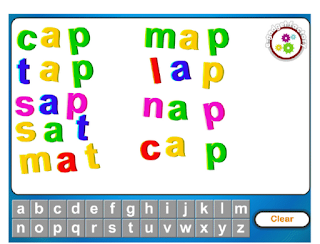
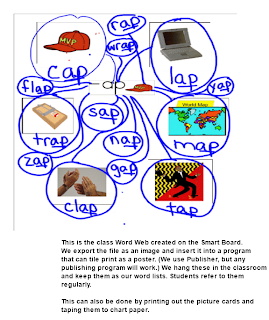
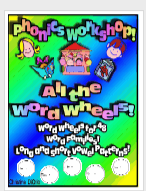
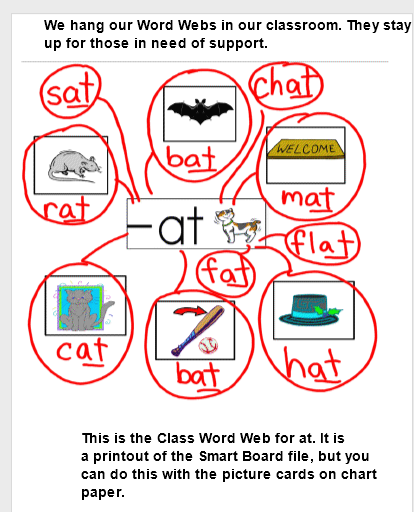
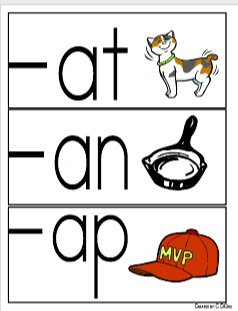
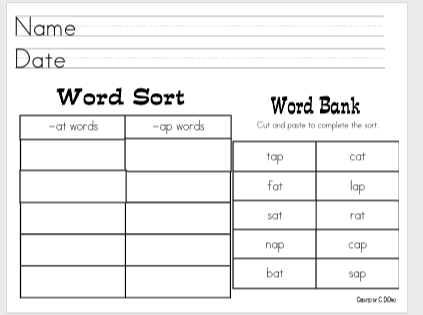
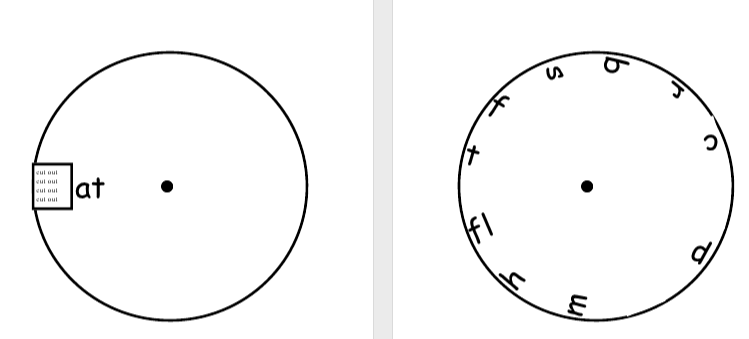
I started working on the second word pattern today for Phonics Workshop. I have to say the students did great. The lesson went much faster today. We were able to do the class bubble map on the Smart Board, the writing of the words on their white boards, and the word wheel. They responded to the prompt of "Make it, read it, write it" with flying colors. We also practice counting sounds as individual c-v-c word and as onset and rime. There was oral practice, manipulation and written practice today.
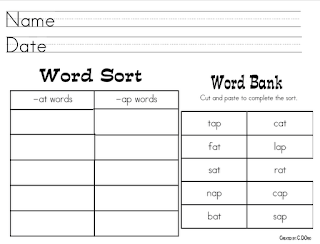
Now tomorrow, they will do the writing paper as morning work and we will do our first word sort! In the beginning, word sorts are cut and pasted. We are not only teaching them to distinguish between two different word patterns, but we are actually teaching them to sort.
Wow! When you really break it down...our Phonics Workshop teaches blending fluency, reading fluency, sound identification, sorting, manipulation of sounds and so much more. You'd never realize how many different life long skills you are teaching until you really analyze it.
Check it out!
Here are a couple of links!
Everything you need to teach First Grade: Common Core, Phonics, Comprehension, Sight Words, Workshop, Math, Team Building!
Tuesday, September 11, 2012
Monday, September 10, 2012
Ready to start the second word pattern?
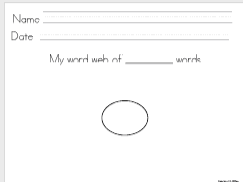
Hi All! I'm getting ready to start my second word pattern in the implementation of Phonics Workshop! I started with the -at pattern. I taught the students to count the sounds on their fingers. It's going to take a lot of practice for them to count. In the past, I've tried using all kinds of manipulatives to teach them to count sounds, but have found much greater success with them using the most available manipulative of all! Their fingers! Once they get it, they are able to break words apart at anytime. The beginning is tough though! We also learned to use our trusty Word Web and Flip Book. The students were so excited to do this for homework and morning work! They took their Word Wheel home and read it to someone at home and then wrote the words on the bubble map. They highlighted the -at chunk with a yellow crayon also.
- So you see, in that seemingly simple pattern, students learned to break apart words into 3 sounds. They learned to identify the initial, medial, and ending sounds. They learned to identify a word pattern as well. They also learned to read those words by manipulating the first sound on a word wheel. We also have a song that goes with the -at pattern, available on Scholastic. So, while singing, they were also reading and identifying the pattern. Plus, they learned to write the at pattern several times by use of a Word Web, Handwriting Paper, and Flip Book. So let's see...they learned to read, write, and identify letter sounds with a seemingly easy process.
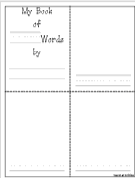
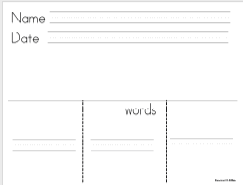
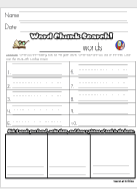
- Are you ready for -ap? It will be even easier. It will be much quicker. Students will be more confident. Students will learn to use the chunk search paper and word paper book. (another application to text and writing practice!) They will learn to use the skills and strategies taught to help them blend and decode words...you will see it...I'm sure of it!
Try the at, an, and ap for free...it works. It's also Common Core related and supportive!
Saturday, September 8, 2012
Having Handwriting Issues? We combine it with our phonics instruction!
Do you have to teach handwriting skills to first graders or kindergarten students? Well, we do. We were having an incredibly difficult time trying to fit in extra handwriting practice for those who needed it and didn't want to waste the time of those who already had those skills in check. We added a handwriting component to our phonics workshop. It's one of the practices we use to embed the chunk we are working on while adding the practice of letter formation.There is a writing paper to go with 48 different word patterns; short AND long vowels. It comes in the vowel packs as an added practice. Almost all of our materials serve as a double for something else. Once the students understand the process of how it works, any of the materials can be used for more than direct phonics instruction. They can be used for centers/work stations, homework, morning work and intervention work. Using our materials eliminates the need to have a million different little pieces and picture cards and letter tiles, etc..MAKE YOUR LIFE EASIER!!! Get the most out of the materials...it works..I promise!
|
| ag writing paper - available in the short a pack along with a writing paper for all and ag! at, an, and ap are free in the at, an, and ap zipped file for free! |
![]() |
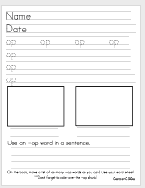
| op writing paper - available in the short o pack - there is also a writing paper to go with ot, og, and ock. (Along with all of the other materials for the word patterns!) Many other materials available at both of our stores: Teachers Pay Teachers & Teachers Notebook |
Thursday, September 6, 2012
Phonics! Teaching blending? How do I do it? Why do I do it?
So I had to split day 1 a of our phonics workshop introduction into several days...it seems that I may have some students who are having some difficulty with blending..But you know what? That's OK right now.One thing to remember about this type of phonics instruction...It's OK to slow down in the beginning... you are teaching your students to hear the letter sounds being blended together to make a chunk and then asking them to separate them out again....This may be a brand new skill for a lot of them...You are also teaching a process to learn to use our materials as tools for learning which takes time at the beginning. Plus you are dealing with some students that can already read, but not decode.
- Even those that can read at an early age sometimes have difficulty picking up this blending process immediately...Sometimes these student read from sight or context, but it is IMPORTANT for these students to learn to decode too! Sometimes those early readers are just pushed through thinking they don't need that blending and decoding instruction because they can read...But that doesn't always work. (Sometimes it does, but not always!) Think beyond first grade and even part of second grade. When students start reading nonfiction books for content areas, like Social Studies and Science, the decoding skill is absolutely necessary. The increase in vocabulary is huge. They need to be able to decode. Sometimes those early readers get stuck because they have been skipped over the blending and decoding process. Don't do it! Teach them to decode. There are ways to differentiate the products and activities for these higher readers.
Anyway...Back to blending! Students made their first word web today with the -at pattern. They made their word wheel, read it two times, and then wrote all the words in their journal. It was kind of funny because what will take 5 - 8 minutes a few weeks down the road, took 45 minutes today! I think I forget every year how long it actually takes to train the kids to work so quickly! But honestly, I know it will come. They were so excited to do the word web again for homework tonight...They are already starting to own this process! Tomorrow they will learn to use the flip book and writing paper as tools also. Seems I need some handwriting instruction as well! It's ok though, we have it all.
![]() |
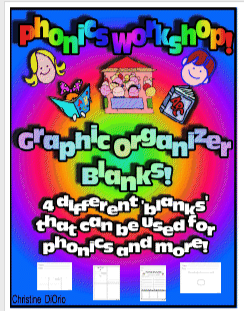
| These are the blanks that we use for independent and guided practice with all patterns throughout. |
$3.00 for all 4! That's a great deal!
![]() |
| Flip Book |
![]() |
| Word Chunk Search |
Tuesday, September 4, 2012
Started Phonics Workshop Today!!!
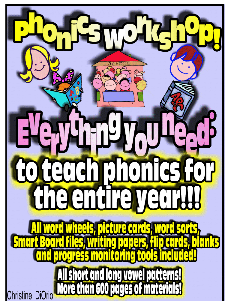
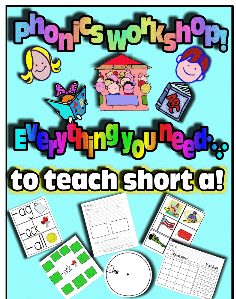
Today I started day 1a of our Phonics Workshop. I introduced blending to my first graders using the -at pattern. Their letter sound fluency is pretty on target, so I decided to start the blending process today. Our Phonics Workshop has been such a positive addition to our instruction in first grade. It teaches students that sound by sound blending AND blending by onset and rime...it's the best of both philosophies....It helps the students rely on the strategy that works best for them. Research shows that systematic phonics instruction works best. That's what we've created. Research also shows that students need a great deal of practice to embed decoding skills. Application to text is of vital importance, but so is encoding and recoding words. Phonics Workshop has it all. We have picture support, word wheels, handwriting and writing practice, word sorts for many different combinations, blank graphic organizers for student to practice writing and illustrating, Smart Board files, and tons of ideas on where to get that application to text. (Check out Scholastic for word family/pattern books and songs!) There is progress monitoring for each vowel that includes a dictation with an alternate if needed. There are also various forms of fluency grids to help students practice reading those patterned words. There are also excel files that help you track the results of your dictations. The at, an, and ap patterns are free. We have the graphic organizers listed together. We have created smaller blocks by vowels to help defray costs. Those vowel packs have everything you need to teach 5 - 7 word patterns for that vowel. There are literally hundreds of files. If you find out that you like teaching phonics our way, you can also purchase all of the short vowel materials for one low price of $30.00. In that file you get it all: picture cards, Smart Board Files, word wheels, word sorts, writing papers, the blank graphic organizers, and lesson plans for implementation for all the short vowel patterns. That's 24 word patterns in all. It's enough to keep you teaching for several months. Totally worth it. Best of all, you have us. We are here for support and advice whenever you need it. Try it...you will love it...Teacher and kid friendly...once it's up and running, it runs itself. The students take ownership over that process and you never have to give new directions again...and even better...they learn to decode effectively AND efficiently!
![]() |
| The whole short vowel pack for $30.00 |
The vowel packs one by one
![]() |
You can also find the system broken up by just word wheels, just picture cards, and just word sorts if you would like supplemental materials!
Monday, September 3, 2012
Open House Soon?
Open House is coming up!
We have the students make a head of out oaktag or cardstock and then bring in a t shirt to put on their chairs. We insert the head they made out of oaktag/cardstock and it looks like a room full of students. Parents AND students love this activity.
We also have the students create a thank you note to their parents. Take a look!
We have the students make a head of out oaktag or cardstock and then bring in a t shirt to put on their chairs. We insert the head they made out of oaktag/cardstock and it looks like a room full of students. Parents AND students love this activity.
We also have the students create a thank you note to their parents. Take a look!
Sunday, September 2, 2012
Looking Ahead to Next Week!
The long weekend is going fast my friends!
PHONICS! at, an and ap are FREE! TPT & TEACHER'S NOTEBOOK
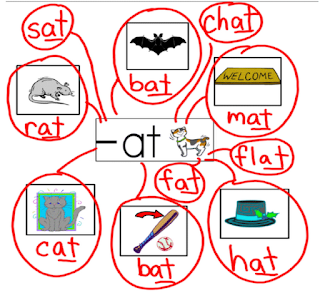
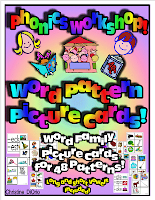
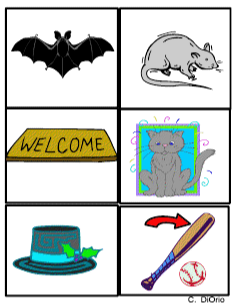
What are you planning to do next week? In our classrooms we are starting our Phonics Workshop. We have been working on review of Letter Sounds and next week will start blending those sounds. We start with the phonogram, -at. On Day 1 we will introduce the word web on the Smart Board. (This can also be done by printing out the pictures and taping/gluing them to chart paper to make a large web.)We show the picture cards one at a time and teach students to blend the sounds. For example: the picture of a cat..."Boys and girls, this is a cat. /c/ /a/ /t/." (I count on my fingers as I break the word into 3 individual sounds. Students follow along counting on their fingers as well.) I do this several times because I am not just teaching the sounds for cat, but I'm teaching the students to break the word into 3 individual sounds and how to count those sounds. Then I will say, "What is the first sound? /c-c-c-c/ What is in the middle? /a-a-a-a-/ What is at the end? /t-t-t-t-/ I do this for each of the picture cards. At this point I am teaching the process of how we use our Phonics Workshop, so I don't even tie the sounds to the letters during this lesson. I end the session by singing a song. "I know a word that has the at sound. I know a word that has the at sound. I know a word that has the at sound. It must have the at sound. Cat is a word that has the at sound. Cat is a word that has the at sound. Cat is a word that has the at sound. It must have the at sound. I then take responses from the children for other at words. As each is spoken, we count the sounds as a group. We are still working the process of learning to identify, count, and blend those sounds. The pictures are visible, so it offers support for those in need. The closure is having the students give an at word to go back to their seats. They can also partner up to tell each other all the at words they can remember and count the sounds. On Day 2, we open the minilesson with the pictures visible and singing the song again. (The students love this.) The students will be on the carpet with their white boards, markers, and erasers. I display the picture web and go through them all again. I model counting the sounds and then students repeat. After all of the words of the pictures have been said and counted, I ask them if they know what letters go with the sounds of /a/ and /t/. I tell them if they know it to write it at the top of their whiteboards. I then reveal the 'at' sorting card to them to check for accuracy. I tell them if they know the chunk -at, then they can spell cat. I then say the word cat and we count the sounds again. I tell them to write the letter that goes with the /c/ sound. Then write the letter that goes with the /a/ sound and finally to write the letter that goes with the /t/ sound. I ask for a volunteer to spell the word. I write it under the picture, circle the word and picture and draw a line to the center sorting card. We do this for each picture and the students end up with a generated list of at words. The practice piece involves the making of the word wheel. I use the phrase, make it, read it, write it to cue them back to their seats. The rest of the lesson plans for Day 3 of at is free on either Teachers Pay Teachers or on Teachers Notebook. It comes with the zipped files. There are 15 files to at, an, and ap. THEY ARE FREE!!! There are word wheels, picture cards, Smart Board files, word sorts, and writing papers for at, an, and ap!!! Plus the lesson plan format for all of Phonics Workshop! It's research based and it works!
PHONICS! at, an and ap are FREE! TPT & TEACHER'S NOTEBOOK
What are you planning to do next week? In our classrooms we are starting our Phonics Workshop. We have been working on review of Letter Sounds and next week will start blending those sounds. We start with the phonogram, -at. On Day 1 we will introduce the word web on the Smart Board. (This can also be done by printing out the pictures and taping/gluing them to chart paper to make a large web.)We show the picture cards one at a time and teach students to blend the sounds. For example: the picture of a cat..."Boys and girls, this is a cat. /c/ /a/ /t/." (I count on my fingers as I break the word into 3 individual sounds. Students follow along counting on their fingers as well.) I do this several times because I am not just teaching the sounds for cat, but I'm teaching the students to break the word into 3 individual sounds and how to count those sounds. Then I will say, "What is the first sound? /c-c-c-c/ What is in the middle? /a-a-a-a-/ What is at the end? /t-t-t-t-/ I do this for each of the picture cards. At this point I am teaching the process of how we use our Phonics Workshop, so I don't even tie the sounds to the letters during this lesson. I end the session by singing a song. "I know a word that has the at sound. I know a word that has the at sound. I know a word that has the at sound. It must have the at sound. Cat is a word that has the at sound. Cat is a word that has the at sound. Cat is a word that has the at sound. It must have the at sound. I then take responses from the children for other at words. As each is spoken, we count the sounds as a group. We are still working the process of learning to identify, count, and blend those sounds. The pictures are visible, so it offers support for those in need. The closure is having the students give an at word to go back to their seats. They can also partner up to tell each other all the at words they can remember and count the sounds. On Day 2, we open the minilesson with the pictures visible and singing the song again. (The students love this.) The students will be on the carpet with their white boards, markers, and erasers. I display the picture web and go through them all again. I model counting the sounds and then students repeat. After all of the words of the pictures have been said and counted, I ask them if they know what letters go with the sounds of /a/ and /t/. I tell them if they know it to write it at the top of their whiteboards. I then reveal the 'at' sorting card to them to check for accuracy. I tell them if they know the chunk -at, then they can spell cat. I then say the word cat and we count the sounds again. I tell them to write the letter that goes with the /c/ sound. Then write the letter that goes with the /a/ sound and finally to write the letter that goes with the /t/ sound. I ask for a volunteer to spell the word. I write it under the picture, circle the word and picture and draw a line to the center sorting card. We do this for each picture and the students end up with a generated list of at words. The practice piece involves the making of the word wheel. I use the phrase, make it, read it, write it to cue them back to their seats. The rest of the lesson plans for Day 3 of at is free on either Teachers Pay Teachers or on Teachers Notebook. It comes with the zipped files. There are 15 files to at, an, and ap. THEY ARE FREE!!! There are word wheels, picture cards, Smart Board files, word sorts, and writing papers for at, an, and ap!!! Plus the lesson plan format for all of Phonics Workshop! It's research based and it works!
Sample pages from the files for free!
Friday, August 31, 2012
It's Friday!!!!
I don't know about you...
BUT I AM EXHAUSTED!!! :) I'm sure you all are feeling the stress of the first few weeks of school in these primary grades. I wanted to share some more of the activities we did this week. This week was very successful! We filled it with not only routines, but ice breakers, energizers, and hands on activities to engage these first graders all day! Take a look at some of our other first week items...
Chrysanthemum Bubble Map
How many of you use Chrysanthemum, by Kevin Henkes at the beginning of the year? It's a great book, isn't it? We use it over and over again throughout the year as a mentor text. The first graders relate to it so well. We first use it during the first few days to start that team building comfort of the children. We discuss how special Chrysanthemum felt because she had such a special name. We then transition it into a class meeting and discussion about what kinds of things make us special and unique. The first graders partner up with each other and tell what makes them special. This way they get more than one idea and get to know each other and feel more comfortable. After the moving around, I fill in the bubbles with four things that make me special. The students then fill out the bubble map with their partners with things that make them special. Some draw, some write, and some do both. It's accessible to all!
Don't forget about our easy to use Alphabet Flip Cards to Review Letter sounds. We use a sound pack with just the letters to intervene, but use our flip cards to help tie a picture to those letter sounds. There is one animal picture for each consonant and two pictures for each vowel sound. We do a 1 minute quick review during transition times or snack or whenever we can fit it in! They help and they are cheap!
BUT I AM EXHAUSTED!!! :) I'm sure you all are feeling the stress of the first few weeks of school in these primary grades. I wanted to share some more of the activities we did this week. This week was very successful! We filled it with not only routines, but ice breakers, energizers, and hands on activities to engage these first graders all day! Take a look at some of our other first week items...
Chrysanthemum Bubble Map
How many of you use Chrysanthemum, by Kevin Henkes at the beginning of the year? It's a great book, isn't it? We use it over and over again throughout the year as a mentor text. The first graders relate to it so well. We first use it during the first few days to start that team building comfort of the children. We discuss how special Chrysanthemum felt because she had such a special name. We then transition it into a class meeting and discussion about what kinds of things make us special and unique. The first graders partner up with each other and tell what makes them special. This way they get more than one idea and get to know each other and feel more comfortable. After the moving around, I fill in the bubbles with four things that make me special. The students then fill out the bubble map with their partners with things that make them special. Some draw, some write, and some do both. It's accessible to all!
For those of you who follow the Responsive Classroom Philosophy, this is a must. It's an easy way to set those expectations by using the student hopes and dreams. We start by discussing why we come to school. The first graders come up with come great ideas! We chart it on the Smart Board or Chart Paper. The next day, we go back over the list we made and discuss how we could hope to achieve all or some of the things on the list, but we elicit one hope or dream for first grade from the students. That also gets charted. _____ hopes to _________. They fill out a speech bubble and draw their picture of themselves from the first day of first grade. Then have them glue the speech bubble to the picture and back with a 1/2 piece of construction paper. I post them in the classroom for students to revisit regularly. The next day, we take those hopes and dreams and tie them into one of three expectations set for the class. 1. We take care of ourselves. 2. We take care of each other. 3. We take care of property. Virtually every rule you've ever made on a list or contract fits into one of these expectations! It truly puts it into kid friendly language that they can understand. Instead of a list of 'no's - like no hitting, kicking, yelling, hurting etc...you set a positive tone for the students. We then focus on how can we take care of ourselves, each other and property? I take pictures of students who are doing those things and put them on the expectations chart. It's posted in the class for the year. They own it and love it! Try it! It works!
![]() |
| This is a 4 page tiled poster! |
Have a peaceful restful weekend! Stay tuned to looking to next week! It's time to start blending letter sounds to make words; at from Phonics Workshop starts next week! I'll repost materials and lesson plans!
Christine :)
Subscribe to:
Posts (Atom)